

Horror films have kept audiences stuck to their seats, being at the centre of culture and discussion. But its representation of women isn’t always positive and it can change. Whose voice is being heard and what do they have to say? Are women the helpless, tortured victim, the brutish killer or the determined saviour?
Beth Younger, professor of English and Gender Studies at Drake University, cites the Geena Davis Institute that tells how, “In film, men are seen and heard [roughly] twice as often as women. But there was one exception: horror.”. This trend began in the 1970s and 80s, we saw the first examples of ‘The Final Girl’ trope, with Laurie Strode in Halloween and Sally in Texas Chainsaw Massacre. Both of these women are faced with a brutal slasher that attacks them throughout the film, but the defining trait is that they survive. Media critic and influencer, ‘Girl on Film’, explained “The original, virginal ‘final girl’ was definitely a damaging stereotype as it deemed other sexually active women worthy of death.”. Surviving isn’t the positive thing it’s seen as often, with the ‘final girl’ facing the most extended torture in increasingly revealing clothing, as opposed to their male counterparts generally facing a fast death. Tom Weaver, horror film historian and author, found that “The average death scene for female characters was 217.2 seconds compared to the scenes involving males at 107.7 seconds”.
There are some exceptions to this trope even in the time, with a great example being Ellen Ripley in the 1979 film Alien, Ripley is a woman being independent and able to fight for herself. The aliens purposely have a phallic shape, showing male genitalia in a negative light; with Ripley being able to combat this being. Girl on Film says, “Thankfully the ‘final girl’ has been flipped on its head in the last decade and we now have some great final girls who have less conventional character traits. Lisa Frankenstein [2024] or Grace from Ready or Not [2019] for instance.” By not making these women need to be pure, conventionally attractive and naive victims, the trope has now been opening doors for other interpretations, another example being the X trilogy in recent years.
Another trope that remains prominent in horror is the ‘monstrous feminine’, as coined by Barbara Creed. This presents the idea that women’s bodies (especially elderly women as “hags”) can be monstrous too, usually using body horror to show this. One of the original examples of this is Massie, the old woman in The Shining [1980]: her aged body is used to make the audience frightened, with features like sagging breasts and wrinkles. This depicts women aging away from youth as horrifying, while we don’t often see male aging being seen in this same way. But, this trope is changing with The Substance, Weapons and Longlegs all using similar imagery of the hag, but largely in critique. Women shouldn’t be afraid to age and the male gaze shouldn’t be the focus of a woman’s existence. Though, not all audiences will see this as an improvement, as they still use the same imagery, and in films like Weapons, they still use the hag trope, though it uses less of the physically aging body to scare.
Megan Lee, a Feminist horror fan, says “I adore the monstrous feminine trope but I feel a lot of it needs to be extended… When it comes to a lot of male body horror it’s so loved and people even find it attractive. But those same people will hate it if a woman even acts monstrous, let alone looks it.” The trope goes against the need for all women to be beautiful and creates space for them to be monsters, though as Megan puts it, “I just think it needs more body HORROR and less just body.”
Both of these tropes suggest some progress; women are no longer confined to strict roles of virginity, male dependence and fear of aging. Girl on Film feels, “We have more women actually getting industry access and making the films, and I think that’s what matters most.” In 2025, only approximately 10% of horror directors were female, this is progress from what it was, but still poses an issue. This is even more challenging for women of colour, where Girl on Film says, “Sadly, I think horror is still failing non-white women in so many ways. It has been so dominated by male directors that even bringing white women into the fold has challenged the industry. We absolutely need to do better. And I hope Sinners has proven to the world that we can.” Two great directors that bring to light this perspective are Nia DaCosta and Jordan Peele.
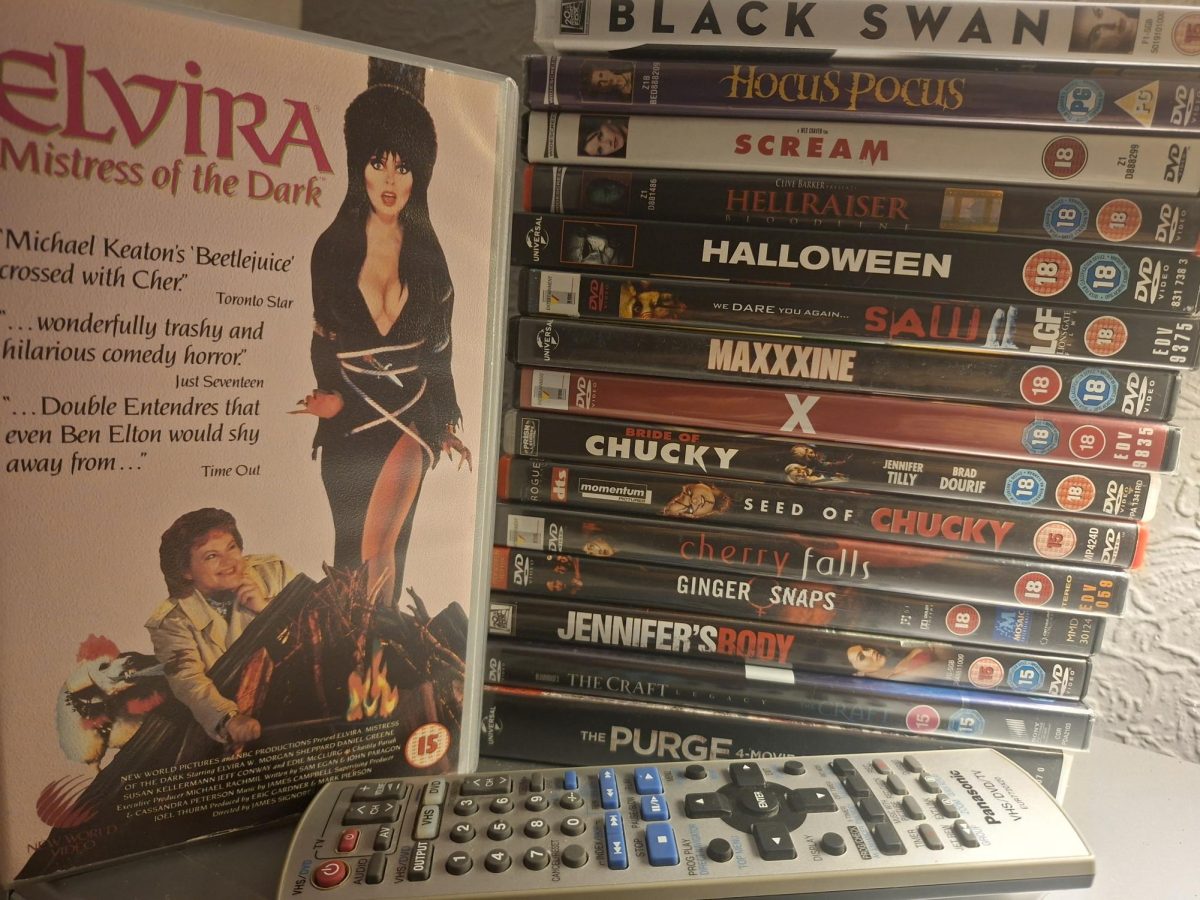
Megan tells how, “Getting into horror is always a hard one. For women it’s definitely harder though.”. But she recommended “Scream, the X trilogy, Ready or Not, Us, and Iron Lung.” Girl on Film gave, “May, Ginger Snaps, Haute Tension, Fresh, Raw, Suspiria (2018). There are so many, but these all have elements of coming of rage, puberty and self love.”
Now that tropes are being reinvented and reclaimed, women are increasingly being heard and women aren’t always the other. I encourage everyone to watch from more female directors in horror and follow the interest if it’s one you have. Horror is for all.