


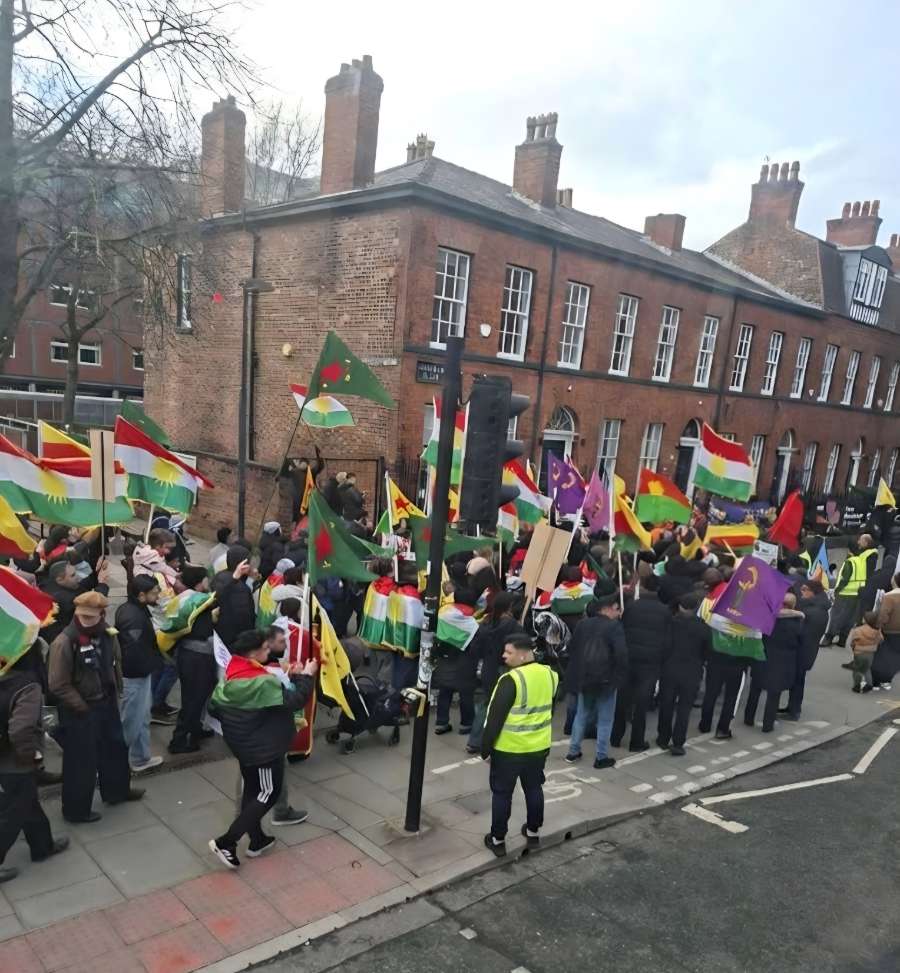
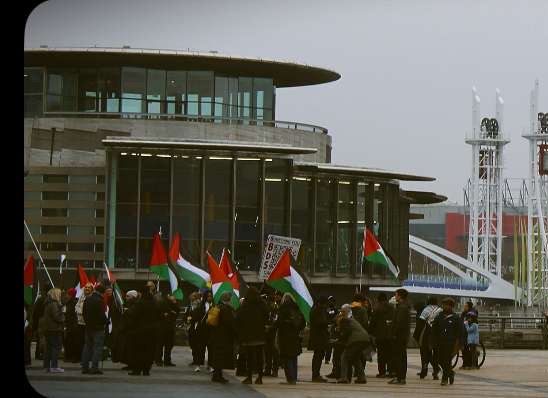

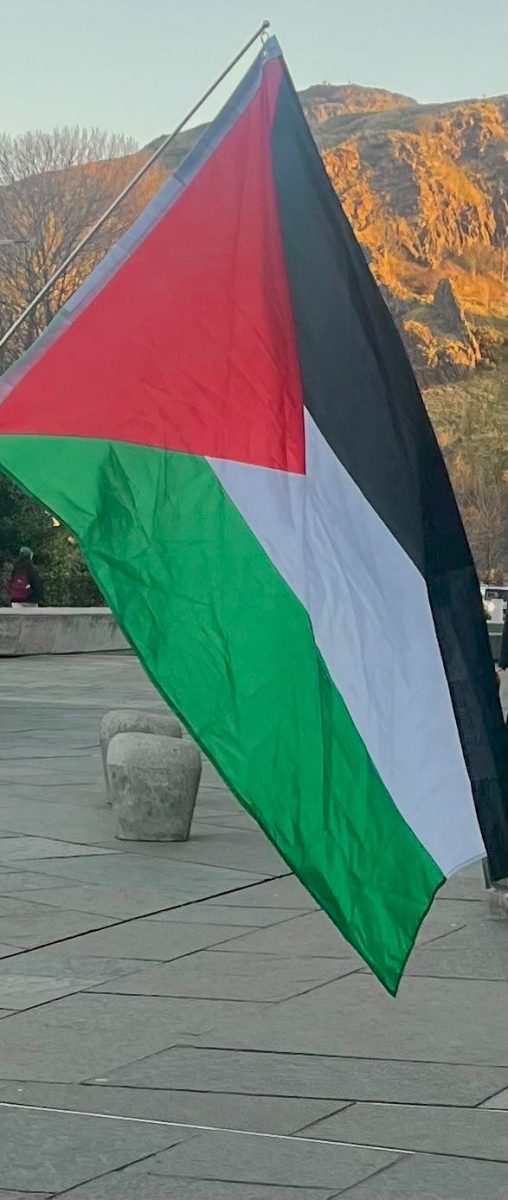



On the 30th of January 2026, I witnessed a protest on Oxford Road. I didn’t recognise the flags or the cause for protest. Doing some research, I learnt that the largest group of stateless people in the world are the Kurdish people. They hold a population of around 30 to 40 million. Now spread throughout Syria, Iraq, and Iran, they are facing oppression and are without a real state of Kurdistan.
A representative of the Manchester Kurdish Society (MKS), from the University of Manchester, made it clear that Kurds have been around for thousands of years and have a very clear identity: “The Kurdish identity is unique and predates the modern nation states, such as that of Iraq, Iran, Syria and Turkey. Kurds are distinct from them in their languages (Kurmanji, Sorani, Badini, Zazaki and some), oral traditions, music, dress, social structures, and ethnicity.” This suggests that Kurds shouldn’t be grouped into any of these other cultures, though there is discussion between scholars on the origins. For example, in his 1994 work, the Italian geneticist, Cavalli-Sforza found that Kurds and other West Eurasians had similar genes, though this similar ancestry does not account for the cultural differences between these groups. With that, we see how even though there are similarities with groups like Iranians, but they have a separate culture that has remained over centuries.
After World War 2, the 1920 Treaty of Sèvres explored the possibility of creating a Kurdish state, but by 1923 it was abandoned. Since then they have remained without a state, split between four countries. But what does this mean in 2026? Specifically in the Syrian region Rojava, and the Iranian region Rojhelat, there is now a humanitarian crisis. The new Syrian leader (known as Julani), who was on the Al-Qaeda and ISIS sanctions list by the UN up until 2025, is trying to unite the Kurdish region into his regime. After asking into Rojava, The Manchester Kurdish Society tells how “Rojava had emerged during the Syrian civil war. Rojava is home to majority Kurds, while also facilitating for Arabs, Assyrians and Armenian communities there. They built a system based on local governance, women’s liberation and secularism”. They successfully fought with US backing against ISIS, with the region being separate since 2012. However, Turkey has “conducted military invasions, drone strikes, forced displacement and demographic engineering”. Turkey sees them as a terrorist region, although they view themselves as democratic and they have a focus on gender and social equality.
This gender equality can be seen in Rojava, where Kurdish women have been braiding their hair in a traditional kezi, in shared resistance, to show that Kurdish culture will remain united no matter what. This braid is generally worn during Newroz (Kurdish New Year), making it significant.
In recent months, Donald Trump withdrew US backing from Rojava, instead backing the Syrian National Army (SNA). The SNA are pushing into Rojava, in conflict against the SDF, the Kurdish-led army in Rojava. Over 170,000 people have been displaced and the Human Rights Watch has found that “SNA factions and other groups, including members of the Turkish Armed Forces and intelligence agencies have abducted, unlawfully arrested, and detained people, including children; committed sexual violence and torture with little accountability; and engaged in looting, theft of land and housing, and extortion.”.
Kurds face a similar fate in Iranian Rojhelat, with Khamanei, the Iranian leader from 1989 to March 2026. Kurds in Rojhelat face systemic oppression under the regime, with restrictions to social media, freedom and equality. All around Iran over the past few months hundreds of thousands of people, Iranian and Iranian Kurds, have been protesting against the restrictions on protest, women’s rights and freedoms and the heavy limits on social media. These protests have been met with military force, with many people being murdered by the Iranian military. MKS told me about the case of Mahsa Amini in 2022, “a victim of brutal Iranian police force”.
In recent weeks, with Khamanei’s assasination by Israeli and US bombing, Fox News says “Reports in recent days have suggested that President Donald Trump spoke with Mustafa Hijri, the leader of KDPI, as Washington explores possible Kurdish involvement in pressure on Iran.”.Trump wanting Kurdish assistance in Iran, but removing backing in Rojava places Kurdish people in danger of extended conflict in both these places. A BBC reporter spoke to Amjad Pahani, a senior Komala party official, he discusses how he’s been waiting for the regime to fall for 47 years. Then, goes on to say ‘“I don’t trust Trump,” he replies bluntly. “I feel he may decide to stop the war. This is my personal view.”’. In the BBC report, we see through multiple officials a fear of Trump backing out and leaving Iran in a civil crisis.
With the escalating conflict in Rojava and Rojhelat, peace can seem distant. Looking at possible peace for Kurds, MKS tell how, “Kurdish independence does not have a single agreed vision. Some Kurds advocate for a unified Kurdish state across borders, while others support federalism, autonomy, or confederalism within their existing states.”. We can see an example of how Kurdish independence in the provinces can work with Iraq, where the KRG have an independent military and government, showing that Kurds can peacefully co-exist in these provinces.
What can we do from Manchester? You could advocate in peaceful protest, donate to charity organisations, educate yourself and others (potentially with Kurdish authors) and oppose Turkish arms sales with your local MP. I remain in solidarity with the Kurdish people and hope the murder, displacement and oppression of their communities will stop. There are some charities and organisations listed below:
Hammad • Jun 29, 2026 at 5:17 am
I like how u found out ab Masror Haiders culture
Joanne Hardy • May 5, 2026 at 6:45 am
What a great article. Very informative , showing a great deal of research, thank you. Thank you also for including practical ways people can help from Manchester.
Ita • Apr 28, 2026 at 11:54 am
Thank you for a really interesting read – I was also taken by the flags at a recent school presentation where a student of Kurdish heritage gave a brief overview of what you detail here.
So great to see young people championing the oppressed and marginalised – I will pass this on