


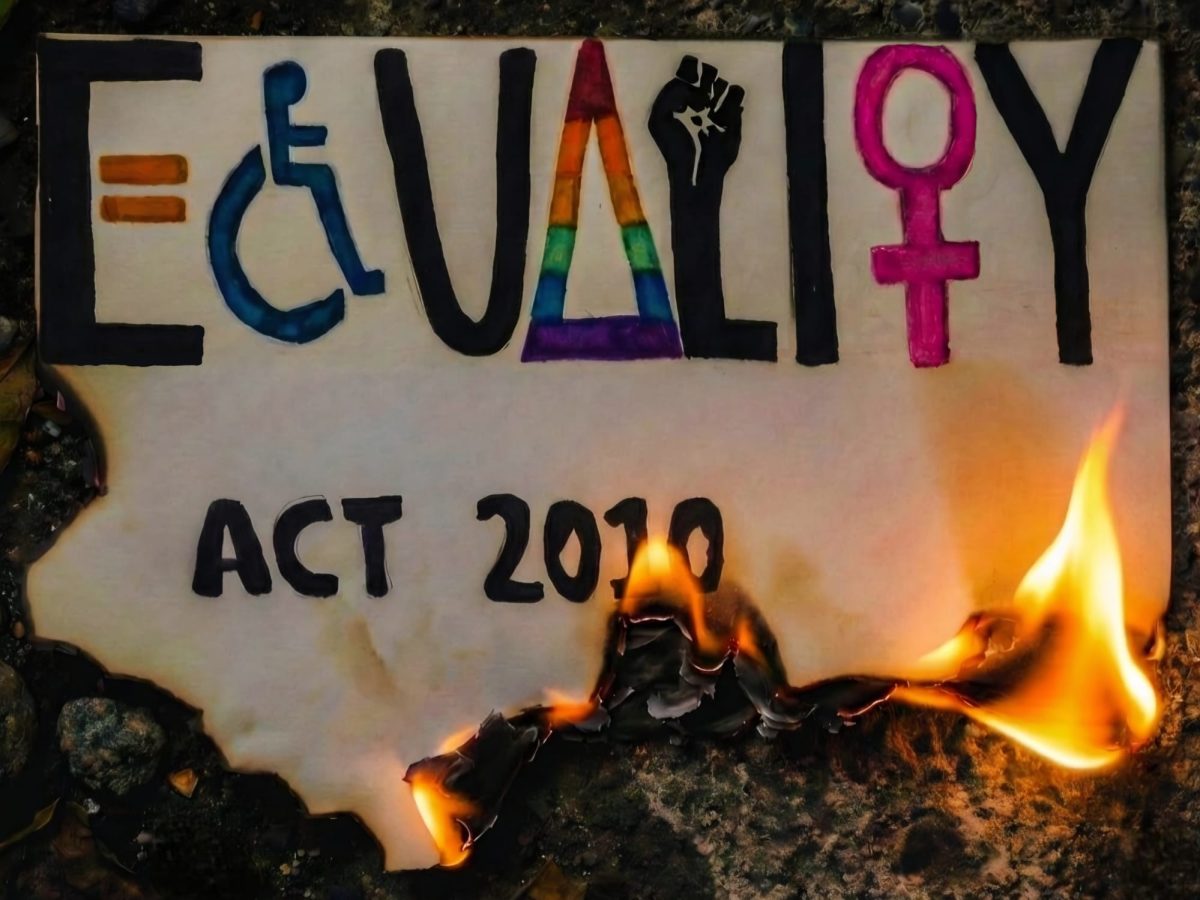
































We’ve all wondered; what does the Reform Party stand for outside of immigration policy? Well, another main pledge in their 2024 manifesto is to repeal the Equality Act, an act that focuses on workplace discrimination and harassment. In a political environment with Populism and a focus on immigration it seems this major decision has been slipped under the rug. I’m here to see how this generally unspoken pledge could affect you.
The Equality Act was introduced by the Labour government in 2010. It aimed to minimise workplace discrimination based on the nine protected characteristics including religion, age, disability, gender, sexuality and race. This affects every single person reading this article and every single person in the country.
Though, specifically it has stood as a cornerstone for ethnic minorities, women and disabled groups; with the income of ethnic minorities increasing by 9.53% since the act, a 10% decrease in the gender pay gap and 36% of disabled people receiving “reasonable adjustments” to benefit work ethic under the act. Whilst dismantling inequality doesn’t rest upon percentiles, these statistics reflect legal equality being achieved to an extent.
After interviewing Xaverian history and politics teacher, Ms. Kerr-Pasiecznik, she reflected on how the act has “provided protection for the more ‘accepted’ groups in law”, acting as a de jure (legal) solution to workplace discrimination. Although, within the act, “definitions of these characteristics are ambiguous, e.g. gender, it isn’t necessarily providing the protection needed for all minority groups.”, this reflection dotes on the limitations in intersectionality and potential expansions within the act. Clearly, there are degrees to the effectiveness, with it serving more as a legal foundation; as Ms. puts “It combats legal misogyny, racism, and homophobia, but not structural”.
The issue of de facto discrimination is especially troubling for ethnic minorities, with structural racism still existing heavily in employment; the Department of Work and Pensions’ research reflected how applicants “with a white British sounding name were called to interview far more often than those with African- or Asian-sounding names”. With “High levels of name-based net discrimination found in favour of white applicants”, from education to employment, there is clearly still a lack of cultural equality and meritocracy that is needing to be expanded on.
This should be taken with nuance, as although there are some limitations we shouldn’t disregard the successes and the foundation that it creates to tackle both de facto (social or structural) and intersectional issues in the future.
However, Reform UK’s 2024 manifesto ‘Our Contract With You’ said they want to: “scrap Diversity, Equality and Inclusion (DE&I)” arguing it has “lowered standards and reduced economic productivity”. This undermines the 97,000 tribunal cases made under the act in 2024 alone. It will become implausible to assist these people in the workplace without a legal infrastructure to base their tribunal claim upon. Dr Rakib Ehsan, a research analyst and journalist for The Telegraph states that: the act comes “at the expense of the white British man”. However, as Philip Landau (a law solicitor) assessed in The Guardian’s article; “This should not require a huge shift in the employer’s attitude as long as they are acting fairly in the first place”, therefore it doesn’t “come at the expense of” any singular group but rather secures everyone’s rights.
Out of a survey conducted to citizens of Manchester (a variety from blue collar workers to Xaverian students), around 60% of all voters were unaware of Reform’s pledge and a further 80% of Reform voters, specifically, were unaware of this pledge. Then when asked how they felt about this decision, 89.3% of the citizens surveyed said Reform’s decision was “negative”, with the other 10.7% citing it as “neutral”.
There seems to be a lack of discussion and written news – with the repeal being in the final page of their manifesto – as the coverage of Reform is dominated by immigration.
Acknowledging both the limitations and positives within the act, Ms Kerr-Pasiecznek argues “The Act should definitely not be repealed” as both domestically and globally “it could open the flood gates to the right taking away some protections or rights.”. This is especially relevant considering Reform UK reveal no intention of improving the limitations but rather removing the whole system.
Concluding such, this repeal is a completely major shift that will lead to extenuated radicalism and breeding of hate but most importantly – inequality and preference to become a legal format of employment. All voters should be told what they’re voting for, it shouldn’t be hidden in the final pages of a manifesto to be searched out.

Leah Branwood • Jun 29, 2026 at 5:19 am
Thank you for writing about this!! Not enough people are aware of this horrible legislation that they want to enforce :((
Neil Mountjoy • Apr 28, 2026 at 8:43 am
A well written article that highlights the issue with legislation; does it really have the impact desired and are people even aware of how vital it is?
simon jackson • Jan 14, 2026 at 11:11 am
Amazing
Sarah Burridge • Jan 14, 2026 at 7:42 am
I think this was a really good choice for an article because (as your statistics showed) there clearly isn’t enough awareness about it. Really interesting! I also love the cover photo 🙂